
How to Master Skin Health Improvement Without Breaking the Bank
Why Skin Health Improvement Starts With What You Do Every Day
Skin health improvement is achievable for most people through a combination of daily habits, smart nutrition, targeted supplements, and consistent sun protection.
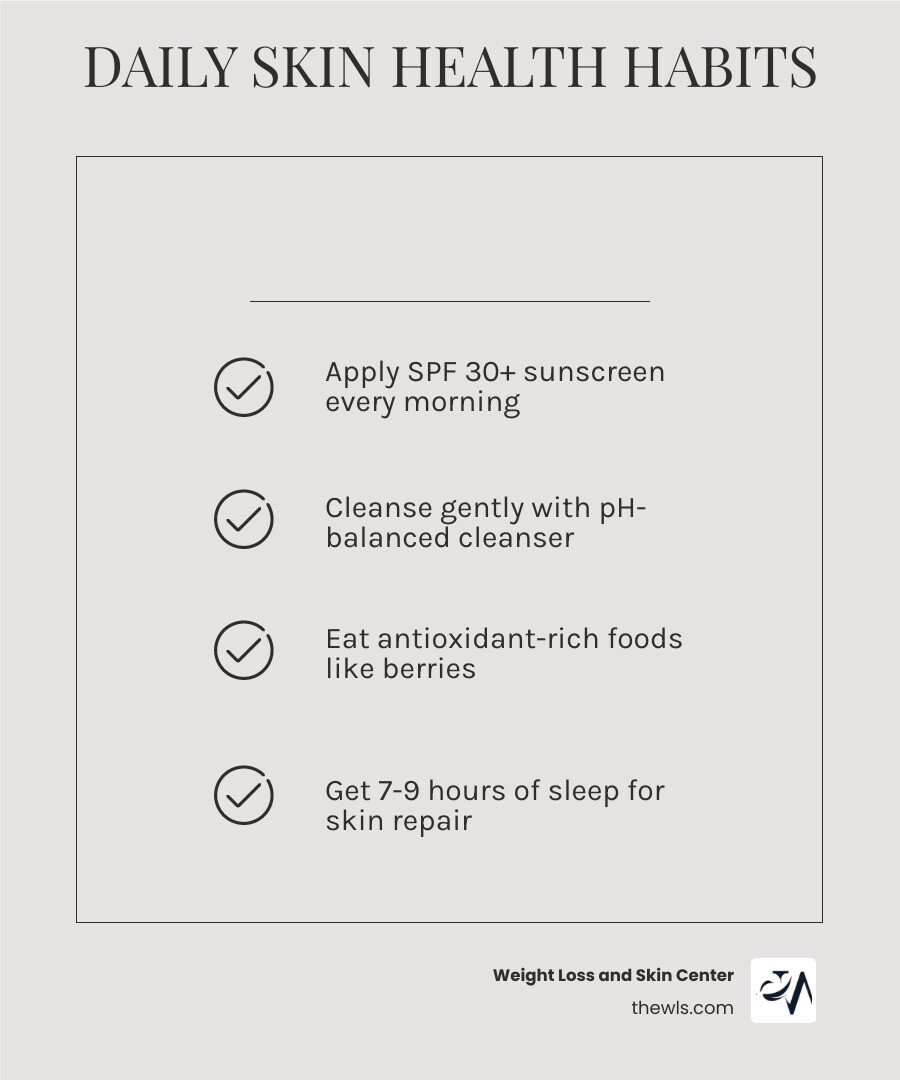
Quick wins for healthier skin:
Apply broad-spectrum SPF 30+ sunscreen every morning
Cleanse gently with a mild, pH-balanced cleanser
Eat antioxidant-rich foods like berries, tomatoes, and leafy greens
Get 7-9 hours of sleep to support overnight skin repair
Manage stress to reduce cortisol-driven breakouts and dullness
Stay hydrated and limit refined carbs and sugars
Consider evidence-backed supplements like Omega-3, Vitamin C, or Vitamin E
Here is the reality: your skin is your body's largest organ and its first line of defense against UV rays, bacteria, and environmental damage. Yet for many women in their 40s, years of sun exposure, stress, and busy schedules quietly chip away at collagen, elasticity, and that natural glow — often before the damage is obvious.
The good news? You do not need an expensive 10-step routine or a $225 moisturizer to turn things around. Simple, consistent choices make the biggest difference. And most of them cost very little.
I'm Fiona Tripp, CEO of the Weight Loss and Skin Center and a wellness expert specializing in natural skin health improvement and non-invasive aesthetic treatments. Over years of working with clients — particularly busy women navigating the skin changes that come with stress and hormonal shifts — I've seen how the right combination of lifestyle, nutrition, and gentle skincare can deliver real, lasting results.
Core Habits for Daily Skin Health Improvement
When we talk about skin health improvement, we have to start with the foundation: the skin barrier. Think of your skin barrier as a security guard. When it’s healthy, it keeps the good stuff (moisture) in and the bad stuff (bacteria and pollutants) out. When it’s compromised, you end up with dryness, irritation, and loss of elasticity.
Gentle Cleansing and Moisture Retention
One of the biggest mistakes we see at our centers in Alexandria and across Virginia is over-cleansing. Using harsh soaps or scrubbing too hard strips away the natural oils your skin needs to stay supple. We recommend limiting your bath or shower time to about five minutes and using lukewarm water rather than hot. Hot water is a thief—it steals moisture right off your face!
After washing, don’t rub your skin raw with a towel. Instead, pat it dry gently and apply a moisturizer while your skin is still damp. This traps that hydration where it belongs. Look for ingredients like hyaluronic acid or glycerin, which are "humectants" that pull water into the skin. According to Scientific research on skin barrier function, maintaining this barrier is the most critical step in preventing chronic skin conditions and maintaining a youthful appearance.
The pH Balance and Hydration Connection
Your skin is naturally slightly acidic (around pH 5.5). Many commercial soaps are highly alkaline, which can disrupt this balance and invite breakouts. At Weight Loss & Skin Center, we often advocate for a holistic approach, including the use of ionized alkaline water. While we use it to support internal wellbeing, keeping your external routine focused on pH-balanced products ensures your skin's "acid mantle" remains intact.

Sleep and Stress: The Invisible Skincare
"Beauty sleep" isn't just a catchy phrase; it’s a biological necessity. While you sleep, your skin goes into "repair mode," producing new collagen and fixing damage from the day. High stress levels trigger cortisol, a hormone that can break down collagen and lead to "stress acne." We suggest finding a stress-management habit that sticks—whether it’s a brisk walk through a North Carolina park, meditation, or just five minutes of deep breathing. Your skin will thank you for the lower cortisol levels with a clearer, brighter complexion.
Advanced Sun Protection and Photoprotection Strategies
If you only do one thing for skin health improvement, let it be sun protection. A lifetime of sun exposure doesn't just cause a tan; it causes wrinkles, age spots, and significantly raises the risk of skin cancer. UV rays are the primary culprits behind collagen breakdown, which leads to sagging skin and loss of elasticity.
Beyond the Bottle: Oral Photoprotection
While topical sunscreen is non-negotiable (we recommend broad-spectrum SPF 30+ every single day, even when it’s cloudy in Alexandria), science is showing us that we can also protect our skin from the inside out.
Polypodium leucotomos: This extract from a Central American fern (often marketed as Fernblock) has been used traditionally for decades. Modern research shows it can promote p53 expression—a protein that helps protect your genome—at levels 2 to 4 times greater than normal when exposed to UV light. Research on oral photoprotection safety indicates that it is remarkably safe, with adverse effects observed in only 2% of participants.
Spirulina: This blue-green algae is an antioxidant powerhouse. In clinical studies, adding spirulina to sunscreen formulations dramatically improved skin pigmentation, collagen preservation, and net elasticity over 84 days compared to using sunscreen alone.
Sunscreen Best Practices
To get the most out of your sunscreen, you need to use enough of it. Most people apply only a fraction of the recommended amount. You need about a palm-sized amount to cover your body and a nickel-sized amount for your face. Reapply every two hours, especially if you’ve been sweating or enjoying the Virginia coast.
Summer Foods for Skin Health Improvement
Your diet can act as a "secondary" sunscreen. During the sunny months, we recommend loading up on these specific nutrients to aid in UV repair:
Flavonoids: Found in berries, dark chocolate, and green tea, these regulate cell growth and offer potent anticancer effects.
Beta-carotene: Carrots and sweet potatoes are rich in this precursor to Vitamin A, which helps prevent wrinkles.
Lycopene: This is what makes tomatoes red, and it’s a proven warrior against UV damage.
Water-rich fruits: Watermelon is 92% water and packed with antioxidants, making it perfect for maintaining hydration and elasticity during a humid North Carolina summer.
According to a Scientific study on micronutrients and skin function, these dietary components reinforce the skin barrier and support the skin's innate immunity.
The Role of Diet and Targeted Supplementation
What you put on your fork is just as important as what you put on your face. A diet high in refined carbohydrates and sugars can actually accelerate skin aging through a process called glycation, where sugar molecules attach to collagen fibers and make them brittle.
Nutrients for Specific Skin Goals
Goal Key Nutrients Best Food Sources Elasticity & Aging Vitamin C, Vitamin A, Astaxanthin Citrus, Carrots, Salmon, Microalgae Acne Reduction Zinc, Omega-3, Jojoba (topical) Pumpkin seeds, Walnuts, Fatty fish Inflammation Curcumin, Vitamin E Turmeric, Almonds, Spinach
Omega-3 Fatty Acids are essential for maintaining the oil barrier of the skin. They are particularly effective at reducing inflammatory lesions in conditions like psoriasis and atopic dermatitis. If you aren't a fan of fatty fish, a high-quality supplement can help keep your skin's inflammatory response in check.
Vitamin C is the holy grail for tissue healing and collagen synthesis. Because humans can't produce our own Vitamin C, we have to get it from our diet or supplements. Research on Vitamin C and skin health highlights its role in eliminating free radicals and accelerating the healing of wounds and burns. For the best results, we often suggest using topical Vitamin C esters, which absorb into the skin more efficiently than pure ascorbic acid.
Curcumin, the active ingredient in turmeric, is another heavy hitter. It has been shown in Phase 1 trials to improve precancerous skin lesions and reduce facial redness. However, curcumin is notoriously hard for the body to absorb, so look for formulations that include piperine (black pepper extract) to boost bioavailability.
Evidence-Based Supplements for Skin Health Improvement
When it comes to supplements, we look for clinical proof.
Astaxanthin: This pigment (found in algae and salmon) is a "super-antioxidant." It’s been shown to significantly improve skin wrinkles and moisture content by protecting the skin's deeper layers from oxidative stress.
Jojoba Oil: While technically a liquid wax, jojoba is chemically very similar to our skin's natural sebum. Scientific findings on Jojoba oil and wound healing show it can reduce the toxicity of other essential oils while enhancing their antibacterial action.
Clay Masks with Jojoba: For those struggling with moderate acne, a six-week regimen using a clay mask containing jojoba oil showed a 54% mean reduction in total lesion count. That is a massive win for an affordable, over-the-counter treatment!
Lifestyle Adjustments to Prevent Premature Aging
We can provide all the non-invasive aesthetic treatments in the world, but if you're smoking or chronically stressed, we’re fighting an uphill battle. Skin health improvement requires a look at the "big picture" of your lifestyle.
The Dangers of Smoking
Smoking is one of the fastest ways to age your skin. It narrows the tiny blood vessels in the outermost layers of your skin, which decreases blood flow and depletes the skin of oxygen and nutrients like Vitamin A. It also damages the collagen and elastin fibers that give your skin its strength and stretch.
Beyond the wrinkles, smoking significantly raises the risk of squamous cell skin cancer, particularly on the lips. If you're a smoker, quitting is the single most effective "anti-aging" move you can make.
Managing Oxidative Stress and Cortisol
Chronic stress keeps your body in a "fight or flight" state, which means blood flow is diverted away from your skin to your muscles and heart. This leaves your skin looking dull and tired. High cortisol levels also weaken the skin's immune response.
The Skin Microbiome
We are learning more every day about the "microbiota"—the trillions of tiny microbes living on your skin. Helpful microbes boost your immune system and protect against infection. Latest research on microbiota and skin barrier suggests that maintaining a healthy microbial balance is key to preventing eczema and other inflammatory conditions. Avoid over-using antibacterial soaps, which can kill off these friendly defenders.
Frequently Asked Questions about Skin Health
What are the risks of using skin supplements?
While many supplements are safe, they aren't without risks. For example, high doses of Biotin (often taken for hair and nails) can interfere with over 70 different laboratory tests, including critical ones for thyroid function and troponin (a marker for heart attacks). Always tell your doctor what you're taking. Some users of Polypodium leucotomos report mild gastrointestinal symptoms or pruritus (itching), though this only occurs in about 2% of cases.
How does smoking affect skin elasticity?
Smoking triggers an enzyme that breaks down collagen. When collagen breaks down, skin loses its "snap-back" quality, leading to premature wrinkles and sagging. The repetitive facial expressions made while smoking—like pursing the lips—also contribute to deep lines around the mouth (smoker's lines).
Can diet alone fix moderate acne?
While diet plays a huge role—especially reducing high-glycemic foods that spike insulin—it is usually part of a broader strategy. Combining a nutrient-dense diet with targeted topicals, like the jojoba oil clay masks mentioned earlier (which saw a 54% lesion reduction), provides the best results for moderate acne.
Conclusion
Mastering skin health improvement doesn't require a Hollywood budget. It requires a commitment to the basics: protecting your skin from the sun, fueling your body with antioxidant-rich foods, and treating your skin with the gentleness it deserves.
At Weight Loss & Skin Center, we are proud to serve the Virginia and North Carolina communities with non-invasive treatments that complement these healthy habits. Whether you're in Alexandria or further south, our focus is always on safe, innovative technology and a holistic approach to your wellbeing.
Your skin is a reflection of your overall health. Start small—swap a sugary snack for some fresh cherries, or commit to wearing sunscreen every single morning. Over time, these small shifts lead to a visible transformation in your skin's health and elasticity.
For those looking to build an effective, affordable routine, you can explore an Assortment of Skin Care Products from Mayo Clinic Store to find science-backed options that won't break the bank. Your journey to glowing, healthy skin starts today!